
The best time to visit Brazilian Amazon destinations depends less on finding a rain-free month and more on choosing the landscape and experiences you want. The region can be visited throughout the year, but its rivers, forests and beaches change considerably between periods of rising, high, falling and low water.
These transformations do not happen at the same time across the entire Amazon. Amazonas, home to Manaus, the Rio Negro and Novo Airão, follows a different cycle from Pará, where travellers find Belém, Marajó, Alter do Chão and the Tapajós River.
Higher-water months are ideal for navigating through flooded forests and reaching narrow channels by canoe. Lower-water periods reveal river beaches and create new possibilities for walking and terrestrial activities. Culture, community experiences and river journeys remain available during both seasons.
The Brazilian Amazon can be visited year-round
There is no single best month for every Brazilian Amazon trip. The ideal period depends on the destination, the level of the rivers and the kind of experience you are looking for.
In Amazonas, higher water from approximately March to July creates favourable conditions for canoe and boat journeys through flooded forests. Between September and February, lower water reveals beaches along the Rio Negro and changes access to trails, islands and river communities.
In western Pará, Alter do Chão is particularly popular from August to December, when the Tapajós River recedes and white-sand beaches emerge. During the higher-water period, these beaches become smaller or disappear, while forests, channels and lakes create a different way of experiencing the region.
Belém and Marajó follow their own rainfall patterns. Both can be visited throughout the year, although the less rainy months generally make outdoor activities and terrestrial travel easier. Instead of looking for one perfect date for the entire Amazon, it is more useful to match your travel dates to the seasonal conditions of each region. Depending on the time available, the journey can focus on one state or combine Amazonas and Pará.
Understanding weather and river seasons in the Amazon
The expressions Amazon rainy season and Amazon dry season can be misleading. The rainforest remains warm and humid all year, and rain is possible even during the least rainy months. In this context, the dry season simply means a period with less frequent rainfall, rather than a completely dry climate.
The Amazonian cycle is therefore better understood through four phases: rising water, high water, falling water and low water. Each phase changes the routes, landscapes and activities available. High water provides access to flooded forests and smaller channels, while low water exposes beaches, riverbanks and some terrestrial routes.
These cycles vary across the region and from one year to another. The Rio Negro, the Tapajós and the Marajó archipelago do not share one fixed calendar, and unusual droughts or floods can affect travel conditions. Seasonal dates should always be treated as general references rather than guarantees.
Best time to visit Amazonas
Amazonas is a strong choice for travellers interested in river journeys, flooded forests, community experiences and the landscapes of the Rio Negro. Manaus is the main gateway, while Novo Airão provides access to Anavilhanas, one of the world’s largest river archipelagos.
High-water season in the Rio Negro
The higher-water experience usually develops between March and July. Historical monitoring shows that the Rio Negro generally reaches its annual peak in Manaus around June or July.
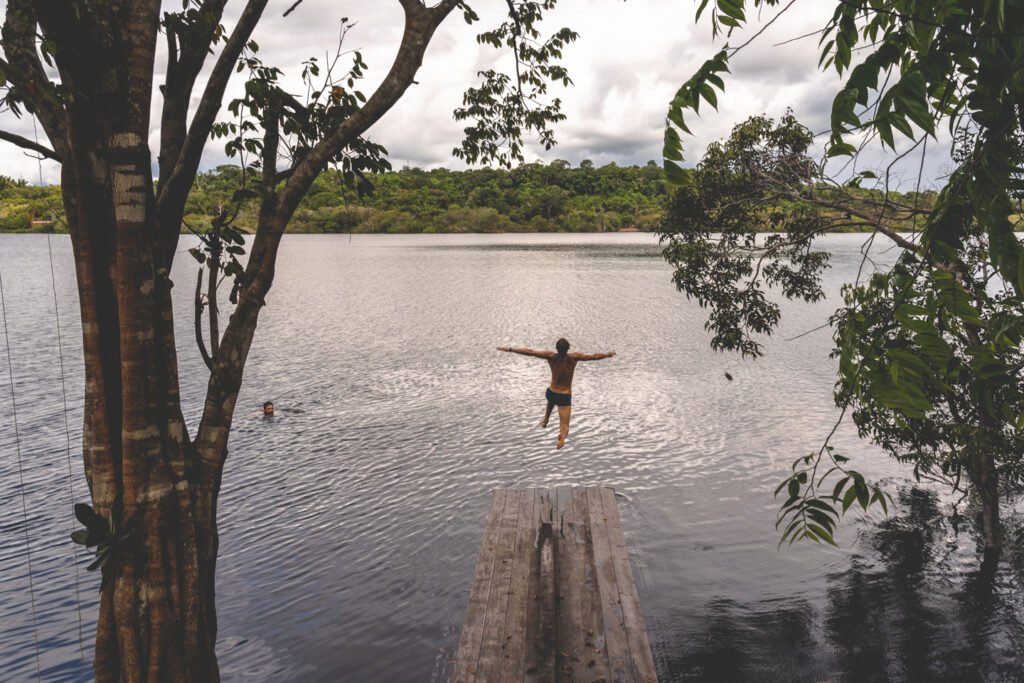
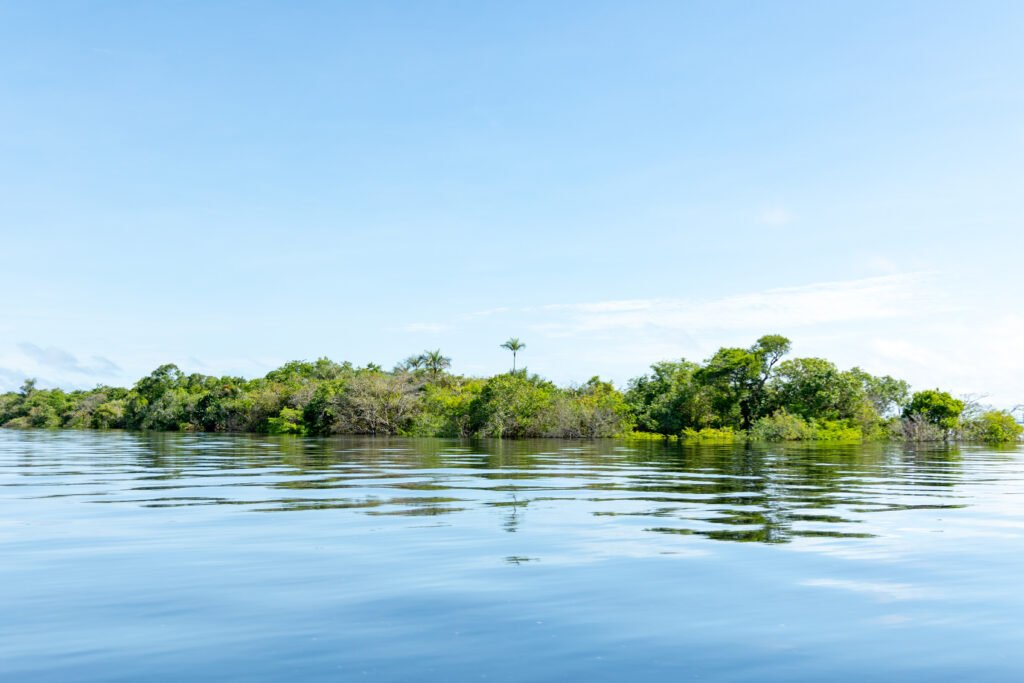
As the river rises, water enters areas of the forest known as igapós. Canoes and small boats can navigate between trees, reaching environments that are inaccessible in the same way during low water. The reflected forest, submerged trunks and narrow waterways create one of the most distinctive landscapes of the Brazilian Amazon.
This period is particularly suitable for boat exploration, canoe journeys, visits to river communities and photography. It also provides a sense of the scale of the Rio Negro during its fuller phase.
High water does not necessarily mean continuous rain. Showers may be frequent, but conditions often change throughout the day. Travellers should be prepared for humidity and rainfall without assuming that every activity will be interrupted.
Low-water season in the Rio Negro
The Rio Negro usually begins to fall after its annual peak, reaching its lowest levels most frequently around October or November. The end of the falling-water period can extend into the beginning of the following year.
From approximately September to February, river beaches become visible in several parts of the region. Some terrestrial routes are easier to access, while navigation through smaller channels may become more limited.
This period works well for travellers interested in combining beaches, walking and boat journeys. Exposed riverbanks and changing islands reveal a very different Rio Negro from the landscape seen during high water.
The lower-water months can feel hotter, especially around midday. Rain remains possible, and exceptionally severe droughts may affect navigation routes and travel times. Local conditions should be checked when planning the itinerary.
Manaus and Novo Airão
Manaus can be visited throughout the year. Its markets, architecture, museums and food provide an introduction to urban Amazonian culture, while its location makes it the main starting point for journeys along the Rio Negro.
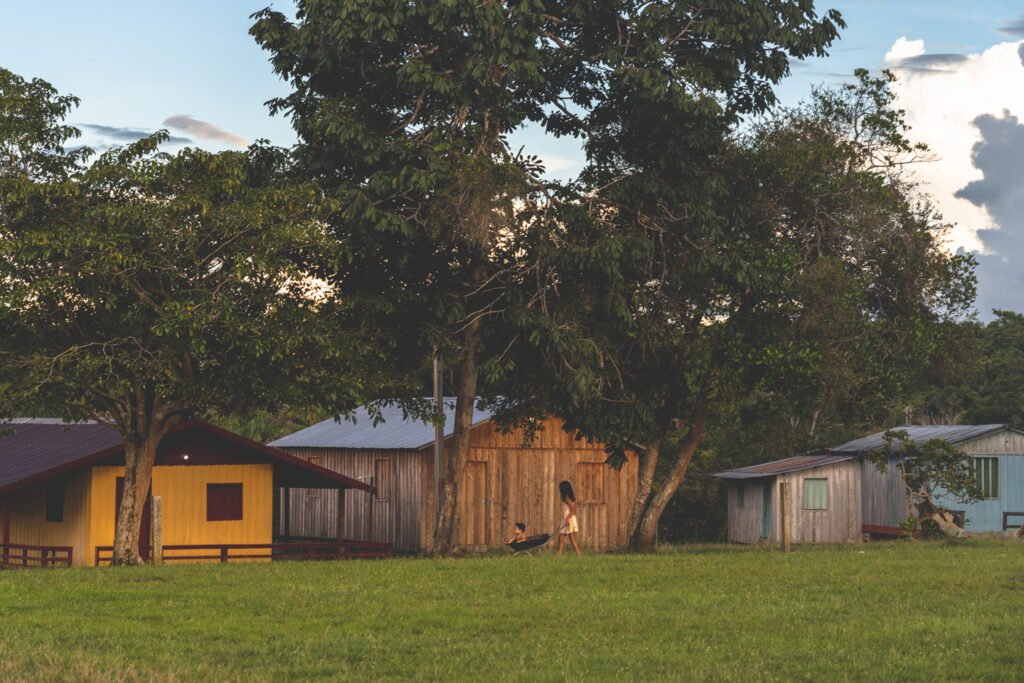
Novo Airão, approximately 180 kilometres from Manaus by road, offers access to Anavilhanas and different community-based experiences. During high water, travellers can explore flooded forests and channels. As the water recedes, beaches and new sections of the islands appear.
Combining Manaus with Novo Airão or a longer journey along the Rio Negro allows visitors to experience urban culture, river landscapes and community life as connected parts of the same territory.
Best time to visit Pará
Pará offers another perspective on the Brazilian Amazon. Belém is shaped by markets, food, islands and river culture. Marajó combines wetlands, beaches and local traditions, while Alter do Chão and the Tapajós region are known for clear waters and seasonal river beaches.
Alter do Chão and the Tapajós River
Alter do Chão can be visited year-round, but the period between August and December is the main choice for travellers seeking river beaches. As the Tapajós recedes, sandbanks and long stretches of white sand become visible around Alter do Chão, Belterra and other parts of the region.
The exact size and formation of the beaches depend on the river level in each year. September also brings the Çairé festival, one of Alter do Chão’s most important cultural celebrations, which increases demand for transport and accommodation.
During higher water, the beaches become smaller or disappear beneath the river. This does not make the region inaccessible or less interesting. Boat journeys, forest channels, lakes and community experiences remain available, presenting a greener landscape dominated by water.
The Tapajós cycle changes more than the beaches. It affects routes, access to channels and the relationship between the river, forest and community life. Neither season presents a complete version of the region: each reveals different landscapes and possibilities.
Belém and Marajó
Belém is a year-round cultural destination. Its markets, museums, historic districts, restaurants and river islands do not depend on low water in the same way as the beaches of Alter do Chão.
Rainfall is generally heavier during the first part of the year, particularly from January to May. From approximately August to November, rain tends to become less frequent, although tropical showers remain part of daily life. The less rainy period may make walking and island excursions easier, while the wetter months still allow travellers to experience the city’s food and culture with more flexible planning.
Marajó generally has a rainier period from December to May and a drier period from June to November. These seasons reshape its fields, wetlands, beaches and travel conditions.
The less rainy months are usually more convenient for beaches, cycling and terrestrial journeys. During the rainy period, parts of the landscape become flooded and some routes require greater flexibility. Marajoara heritage, local food, riverside communities and cultural experiences, however, remain relevant throughout the year.
Amazonas and Pará: choosing one region or combining both
Amazonas often suits travellers who want to place river navigation and flooded forest at the centre of their journey. During high water, the Rio Negro and Anavilhanas provide access to igapós and smaller waterways. As the river recedes, beaches, islands and terrestrial activities become more prominent.
Pará combines river landscapes with strong cultural and gastronomic experiences. Alter do Chão is especially attractive during the Tapajós beach season, while Belém and Marajó offer markets, local traditions, wetlands, islands and cultural experiences throughout the year.
Both states offer boat journeys, river beaches and opportunities to visit communities. The difference lies in how these elements are combined. Amazonas is strongly structured around the Rio Negro and its hydrological cycle, while Pará allows travellers to connect the Tapajós, Marajó and the urban culture of Belém.
Neither state offers an objectively better Amazon experience, and travellers do not necessarily need to choose between them. With enough time, Amazonas and Pará can be combined in a single journey, bringing together the Rio Negro’s flooded forests and river navigation with the Tapajós beaches, Marajó’s landscapes and the cultural life of Belém.
A combined itinerary usually requires a domestic flight between the two states and works best when each region has enough time to be experienced without becoming a brief stop. The route should consider travel dates, river cycles and the experiences available in each destination. Travellers with a shorter schedule may prefer to focus on one state, while a longer trip can reveal how diverse the Brazilian Amazon is across both territories.
Choosing the season by experience
For flooded-forest journeys, the higher-water months between March and July are generally the best reference around the Rio Negro. Travellers interested in river beaches should consider September to February in parts of Amazonas and August to December around Alter do Chão and the Tapajós.
Boat travel is possible throughout the year. Higher water provides greater access to flooded forests and narrow channels, while lower water reveals beaches and different river routes. Walking and other terrestrial activities tend to be easier during less rainy and lower-water periods, although trail conditions depend on the destination and recent rainfall.
Cultural travel is less restricted by the river cycle. Manaus, Belém, Marajó and river communities can be experienced in different seasons. Local festivities, markets and cultural calendars may be more important than weather when choosing travel dates.
Travellers seeking quieter periods should avoid major Brazilian holidays and the most popular regional events. Alter do Chão becomes busier during the beach season and Çairé, while July and the end-of-year period can increase demand in several destinations.
Planning your Brazilian Amazon journey
The best time to visit Brazilian Amazon destinations is the period that matches the landscapes and experiences you want to find. Higher water opens routes through flooded forests, while lower water reveals beaches and expands access to terrestrial environments. Neither season provides a more complete experience; each presents a different expression of the territory.
Amazonas offers a journey centred on the Rio Negro, navigation and flooded forests. Pará connects river beaches, wetlands, food, festivals and urban culture across the Tapajós, Marajó and Belém. These experiences can shape separate itineraries or complement one another in a longer journey through both states.
Poranduba plans responsible journeys through the Amazon using local knowledge, community participation and careful attention to seasonal conditions. This makes it possible to create an itinerary focused on one region or combine Amazonas and Pará according to your travel dates, available time and interests.